
GS Yuasa’s Space-Use Lithium-ion Batteries Installed on the Martian Moons eXploration (MMX) Spacecraft
October 21, 2026
GS Yuasa Technology Ltd.
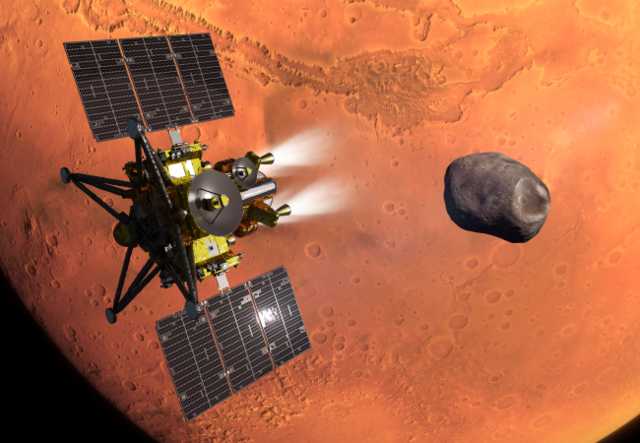
GS Yuasa Corporation (Tokyo Stock Exchange: 6674; “GS Yuasa”) announces that space-use lithium-ion batteries manufactured by GS Yuasa Group company GS Yuasa Technology Ltd. (“GYT”) are installed on the Martian Moons eXploration (MMX) spacecraft.
MMX is scheduled to launch from the Tanegashima Space Center of the Japan Aerospace Exploration Agency (JAXA) on October 20, 2026. After a journey of approximately one year, it will arrive in the vicinity of Mars and enter orbit around the planet.
MMX will then enter a quasi-satellite orbit*1 around Phobos, one of Mars’ moons, to conduct observations and collect samples. After completing these activities, the spacecraft will return to Earth carrying the samples. The mission aims to achieve the first-ever sample return from the Martian system and is scheduled to return in fiscal year 2031.*2
The batteries aboard MMX will supply power when the spacecraft is not in sunlight.
MMX(© JAXA)
Cells used in GS Yuasa’s space-use lithium-ion batteries
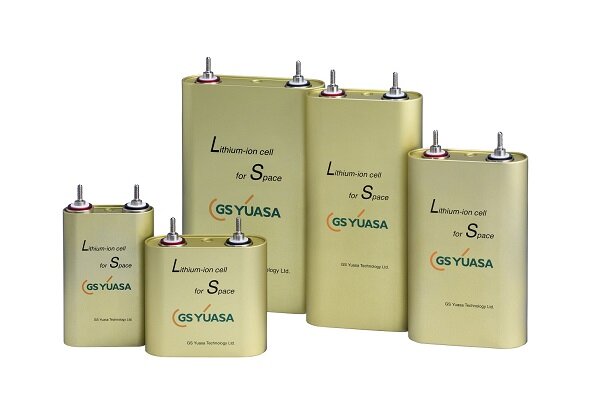
GYT's space-use lithium-ion batteries*3 have been adopted in over 260 space vehicles worldwide since their orbital space verification in the early 2000s.
In recognition of this track record and their ability to withstand long-term operation in the high-vacuum environment of space, the batteries were selected by Mitsubishi Electric Corporation, which is responsible for the design and manufacture of the MMX spacecraft system and provides technical support for its in-orbit operations through its return to Earth.
GYT develops, manufactures, and sells batteries and power supplies for special applications, delivering high-performance, high-quality batteries for special environments ranging from the depths of the ocean (6,500 meters below sea level) to the upper atmosphere (36,000 kilometers above sea level). We will continue to contribute to space development through the development and manufacture of high-performance lithium-ion batteries.
*1 A quasi-satellite orbit is an orbit in which the MMX spacecraft travels around Mars alongside Phobos, staying near the moon. From Phobos, the spacecraft appears to orbit around it.
*2 For information on MMX’s functions, role, and technology demonstration mission, please visit JAXA’s website:
https://www.jaxa.jp/projects/sas/mmx/index_j.html
*3 These high-performance lithium-ion batteries for space applications were developed under contract to JAXA and are registered in the JAXA Component System. Under this system, JAXA’s Research and Development Directorate develops components and devices for common use on satellites and registers them in a database for public access. For more information, please visit JAXA’s website:
https://www.kenkai.jaxa.jp/library/database/db-compindex.html
Related Articles
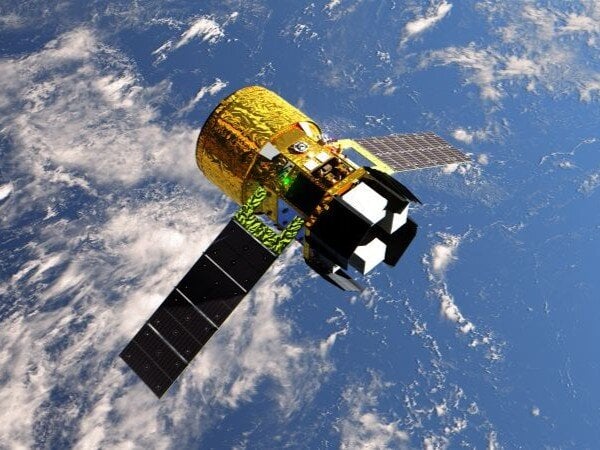
GS Yuasa’s space-use lithium-ion batteries have been installed on first HTV-X (HTV-X1)

GS Yuasa's Technology Development Proposal Selected for JAXA's Space Strategy Fund ~ Promoting the development and practical application of fifth-generation lithium-ion batteries for space use ~

GS Yuasa's lithium-ion batteries have been installed in the “H-IIA Launch Vehicle No. 50 (Final Unit)” and the “Greenhouse Gas and Water Cycle Observation Technology Satellite GOSAT-GW.”


